
Covering an area of 20,000 km², Ruaha National Park is the second largest national park in Tanzania after Selous Game Reserve located in Central Tanzania. Ruaha is one of the wilder and remote parks in the country is an ultimate destination for wildlife and boating safaris.
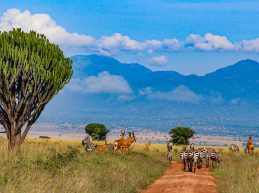
Ruaha National Park’s name comes from the Great Ruaha River, which flows along its South-Eastern margin and is the focus for game viewing. The river serves as a lifeline for the wildlife in the park. The park is characterized by a semi-arid type of vegetation, baobab trees and acacia, and there are over 1,650 identified plant species. During the dry season, the savannahs are golden and dotted with baobab trees, while misty hills stretch across the horizon.
Ruaha National Park is the least places in Tanzania offering remote and exclusive safaris, it is located to the west of Nyerere National Park and south of the Serengeti National Park. Ruaha National Park is part of the larger Rungwa-Kizigo Mugesi eco-system which covers over 45,000 sq.km. The park was originally established as Saba Game Reserve by the German Colonial government, later in 194, it was renamed Rungwa by the British Colonial Government. Later in 1964, the southern part of the reserve was gazetted into a national park, forming Ruaha National Park.
Wildlife in Ruaha National Park
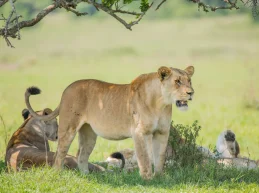
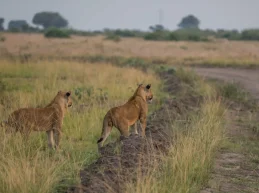
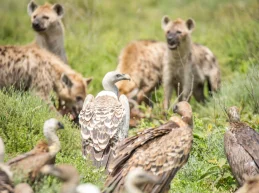
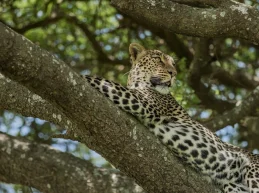
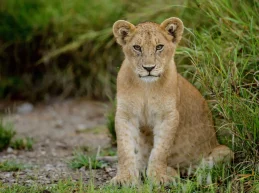
Ruaha National Park is renowned for its huge predator sightings, the park is home to 10% of Africa’s lions, including big prides of 20 or more individuals. The park is also home to one of the only four East African cheetah populations, with over 200 individuals and has the third largest wild dog population in the wild.
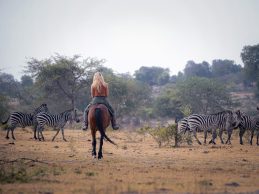
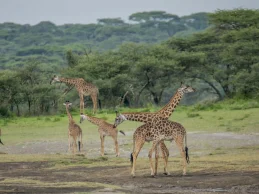
Elephants are seen in high densities during the dry season, when they gather around the dry riverbed to dig for water with their trunks and front feet. Other wildlife in Ruaha National Park include zebras, Defassa waterbuck, impala, giraffe, Grant’s gazelle, greater kudu and lesser kudu among others.
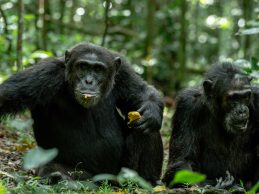
Ruaha National Park is also home to a number of reptiles and amphibians like poisonous and non-poisonous snakes, monitor lizards, croodiles, agama lizards and frogs.
Birdlife in Ruaha National Park
With over 500 recorded bird species, Ruaha National Park is one of the important Birding Area in Tanzania. The park offers a plethora of bird species including a fascinating mix of birds from both Southern and East Africa. Endemic species such as the yellow-collared lovebird, ashy starling, and Tanzanian red-billed hornbill can be seen in Ruaha National Park.
Birds in Ruaha National Park include the Crested barbet, Dickinson’s kestrel, Pale-billed hornbill, Violet-crested turaco, Racket-tailed roller, Plovers, Kingfishers, Hornbills, Green-wood hoopoes, Sunbirds, Bee-eaters and Egrets.
The Ruaha National Park
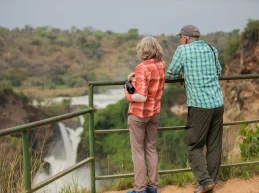
The Great Ruaha River is a life line of Ruaha Ecosystem and one of the main tourist attraction in the park, the river runs along the park’s eastern edge, it is approximately 457 kilometers long with a catchment area of 68,000 square kilometers in its tributary basin. River Ruaha runs through the Usangu Marshes before joining the Rifiji River and is nourished by several rivers including the Lukosi, Kitete, Little Ruaha, Yovi, Sanje, Kisigo, Mbarali, Kimani and Chimala among others.
Safari Activities to Do in Ruaha National Park
Game Viewing
Ruaha National Park offers incredible Tanzania game viewing safaris, with 80 species of wildlife and 10% of the world’s lion population calling the plains home. Game viewing in Ruaha National Park is done as morning, afternoon game drives and night game drives, these game drives are led by experienced guides.
During the game drives, you will be led to locations with the best sightings of several wildlife species including elephants, lions, giraffes, leopards, gazelles, warthogs among others.
Birding
With over 500 bird species recorded, Ruaha National Park is a birder’s paradise and a perfect destination for Tanzania Birding Safaris. Birds in Ruaha include some endemics such as the Ashy starling and the Yellow-collared Lovebird. Resident bird species include the Crested barbet, Dickinson's kestrel, Pale-billed hornbill, Violet-crested turaco, Racket-tailed roller, Plovers, Kingfishers, Hornbills, Green-wood hoopoes, Sunbirds, Bee-eaters and Egrets.
From October to November and from March to April, Ruaha National Park is visited by Eurasian migrants twice a year.
Birds to lookout for on a birding safari in Ruaha National Park include African fish eagle, Ashy starling, Black-bellied bustard, Buff-crested bustard, Collared palm-thrush, Crested barbet, Eleonora’s falcon, Emerald-spotted wood dove, Goliath heron, Long-crested eagle, Meyer’s parrot, Namaqua dove, Sooty falcon, Southern ground hornbill, Tanzanian red-billed hornbill, White-bellied go-away bird and Yellow-collared lovebird.
Walking Safaris
Walking safaris in Ruaha National Park offer visitors a chance to explore the park on foot and get close encounter with the park’s wildlife and enjoy the beautiful on foot. There are trails running through the park, they expose visitors to a variety of species of birds, plants and animals.
Walking safaris in Ruaha National Park are offered as short and long walks, lasting between 2 to 4 hours respectively.
Cultural Encounters
Cultural Encounters in Ruaha National Park offers you an opportunity to learn more about the indigenous people, their traditions and way of life. The communities surrounding the park have been made accessible to visitors so that they may experience the traditional way of life and customs
How to Get to Ruaha National Park
Tanzania Safaris to Ruaha National Park often start in Dar –es-Salaam and the main entry point is through Julius Nyerere International Airport (DAR). Ruaha National Park is accessed by road as well as air.
By Road: From Dar es Salaam it is a drive of about 10 hours to Ruaha National Park with much of it on sandy, uneven road. Many visitors to Ruaha National Park often take stop at Mikumi National Park which takes around 5 hours by road.
By Air: Ruaha National Park is served by two airstrips, one in Msembe and one in Jongomero. There are chartered and scheduled flights from Dar-es-Salaam to one of the park’s airstrips and transfer to your lodge or camp by road.
Where to stay in Ruaha National Park
Accommodation in Ruaha National Park ranges from budget, midrange and luxury tented camps and safari lodges. Our best pick include Jabali Lodge, Mwagusi Safari Camp, Ruaha River Lodge, Asanja Ruaha and Jongomero among others.
Best Time to visit Ruaha National Park
Though Ruaha National Park is a year-round destination, the best time to visit this incredible park is during the dry season, from June to October. This is the ideal time to visit Ruaha for wildlife sighting as animals from all across the park congregate at water sources, and the thinning vegetation cover offer possibilities of seeing even the smallest animals.
For birding, the best months to visit are of November to April, as large number of migrating species arrive in the park. The wet season from March to May is not recommended to visit Ruaha National Park as the access roads to the park are muddy.