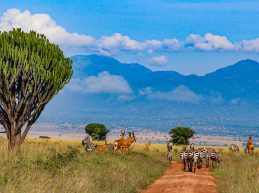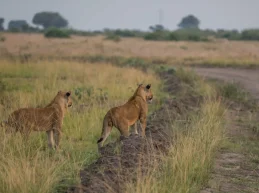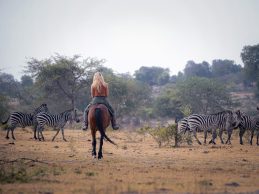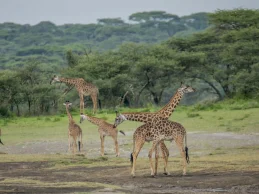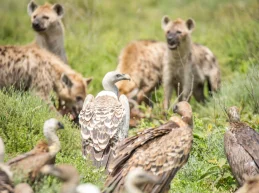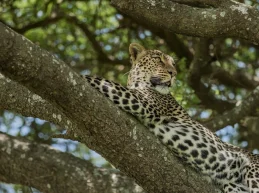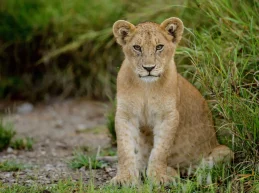
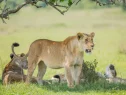
Located in South of Kenya, on the border of Tanzania’s Serengeti National Park. Masai Mara National Park is renowned for being one of the best safari destinations in Africa. The reserve is named from a local Masai – Maa language world “Mara” meaning “Spotted”, it refers to how the Mara is dotted with acacia trees, indentations and craters when looked at from a far. Its wide open plains provide an oasis – like sanctuary for the abundant wildlife like elephants, buffaloes, giraffes, zebras, hyenas, giraffes and the celebrated Mara’s Big cats; lions, leopards and cheetahs.
Masai Mara National Reserve is also famous for the Great Wildebeest Migration, an epic annual migration of over 2 million wildebeests and thousands of gazelles and zebras. The migration arrives from about July to November in their search for water and green pasture.
Masai Mara covers about 370,000 acres sharing unfenced borders with a number of private conservancies managed by the Maasai. The reserve forms the northern-most part of the Mara – Serengeti ecosystem, famous for the annual Wildebeest Migration. The landscape is dotted with thorn trees, Kopjes and craters, Masai Mara is drained by its major rivers; the Sand, Talek and Mara rivers.
Wildlife in Masai Mara National Reserve
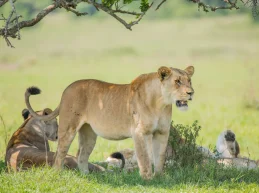
Masai Mara National Reserve is listed among the top wildlife destination in Africa and Kenya’s flagship conservation area, the reserve is home to diverse population of game including the Big Five – lion, elephants, buffaloes, rhinos and leopards and the Great Migration.
Other wildlife species found in Masai Mara National Reserve include giraffes, hippos, cheetah, zebras, aardvark, aardwolf, African Hare, Banded Mongoose, common eland, Kirk’s Dik-Dik, Klispringer, olive baboons, oribis, crested porcupine, Grant’s Gazelle, Dwarf Mongoose, impalas, bushbucks among other.
The Great Migration
The Great Migration also known as the Wildebeest Migration is the movement of a million plus wildebeests from Serengeti in Tanzania northwards into the adjoining Masai Mara National Reserve in Kenya. It is one of the world’s most spectacular and thrilling display of wildlife behavior. The animals move every year search for water and green pastures with the primal instincts guiding them, they also follow the climatic rainfall patterns over the Serengeti – Masai Mara eco system.
Up to 1.5 million wildebeest and close to a million zebras and Thomson and Grant’s Gazelles undertake the long trek that lasts many weeks, their journey is especially frought with danger as they cross the crocodile infested Mara and Talek rivers along the way, during which many cannot escape the giant Nile crocodiles lying in wait for their prey.
The Wildebeest Migration in Masai Mara typically starts in July and ends late September, though the exact dates around this period are not predictable until the first large wildebeest herd actually gathers at the northern edge of Serengeti as they near the Mara.
Birdlife in Masai Mara National Reserve
Masai Mara is home to almost 500 bird species including 47 species of birds of prey, thriving in the Masai Mara’s treetops, bushes and skies. These birds include Abdim's Stork, African finfoot, African wood owl, Ayres's hawk eagle, Cinnamon-breasted bunting, Denham’s bustard, Giant kingfisher, Grey-crested helmet-shrike, Grey penduline tit, Hildebrandt's starling, Jackson’s widowbird, Lazy cisticola, Ostrich, Purple grenadier, Red-throated tit, Ross's turaco, Rosy-throated longclaw, Rufous-bellied heron, Rufous-throated wryneck, Saddle-billed stork, Schalow's turaco, Secretary bird, Silverbird, Southern ground hornbill, Swahili sparrow, Tabora cisticola, Temminck's courser, Trilling cisticola, Usambiro barbet, White-bellied go-away bird, Woolly-necked stork, Yellow-mantled widowbird and Yellow-throated sandgrouse among others.
Safari Activities to Do in Masai Mara National Reserve
Game Viewing
Game viewing is the most popular Kenya safari activity in Masai Mara National Reserve offering visitors a chance to explore the endless plains of the reserve and spot the abundant wildlife. Game drives lasts 2 to 3 hours per drive in the morning and afternoon hours, with morning timings usually scheduled from 6:30 am to 9 am and afternoon from 3.30 pm to 6:30 pm, though visitors may opt for full day game drives from 08:00 am to 4 pm with panic lunch.
During the game drives you will enjoy excellent sightings of animals including the Big Five – lion, leopards, cape buffaloes, elephants and rhinos and other animals including zebras, wildebeests, giraffes, elands among others. If you visit the reserve from July to September, you will witness the Great Migration as the endless plains of Masai Mara are dotted with millions of wildebeests and thousands of zebras and gazelles on their annual journey.
Birding
Masai Mara National Reserve is one of the great birding destinations in Kenya as well as Africa, the reserve is home to over 500 bird species including endemic species. Some of the birds to lookout for including Abdim’s stork, African finfoot, African wood owl, Ayres’s hawk-eagle, Bateleur, Cinnamon-breasted bunting, Common ostrich, Denham’s bustard, Giant kingfisher, Grey penduline tit, Grey-crested helmet-shrike, Hildebrandt’s starling, Jackson’s widowbird, Kori bustard, Lazy cisticola, Purple grenadier, Red-throated tit, Ross’s turaco, Rosy-throated longclaw, Rufous-bellied heron, Rufous-necked wryneck, Saddle-billed stork, Schalow’s turaco, Secretary bird, Silverbird, Southern ground hornbill, Swahili sparrow, Tabora cisticola, Temminck’s courser, Trilling cisticola, Usambiro barbet, White-bellied go-away bird, Woolly-necked stork, Yellow-mantled widowbird and Yellow-throated sandgrouse among others.
The best time for birding in Masai Mara is from November to April when migrants from Europe and North Africa arrive. This coincides with the wet season (November to May) when many species can be seen in breeding plumage.
Hot Air Balloon safari
Hot Air Balloon Safari is one of the best way to explore the endless plains of Masai Mara and understand the sheer scale of the reserve, the ride takes place early in the morning. You will be up early with a quick coffee before transferring to the balloon launch site, then board the balloon and begin the flight which lasts for around an hour.
The pilot will take you to different elevations, getting lower over herds of elephants or wildebeests and then higher to take in the expanse of Masai Mara with its plains and winding rivers. The flight offers you aerial views of the reserve and the animals. After the flight, enjoy a champagne breakfast before heading to the lodge or continue on a game drive exploring the reserve.
Maasai Cultural Visit
Cultural visits in Masai Mara National Reserve takes visitors on a visit to the Maasai people, known globally for their vibrant red robes and tremendous bravery as fierce warriors in the wild. Their way of life can seem unimaginable for many as they traditions and customs have not been affected by modernity and technology.
During your visit, you will get a fascinating insight into their life, learning about their rih history and culture. For centuries , the Maasai have mastered the art of living off the land, amongst the untamed wild.
How To Get to Masai Mara National Reserve
Masai Mara National Reserve can be accessed via road or air while on a Kenya Safari.
By Air – There are domestic and chartered flights from Wilson Airport in Nairobi to one of the seven airstrips serving Masai Mara, including Keekorok, Siana, Musiara, Ol Kiombo and Serena Airport.
By Road – From Nairobi, the capital of Kenya it is a drive of approximately six hours covering about 270 km. This journey involves stops at the Rift Valley View Point for beautiful views of the escarpments and in Narok Town for interaction with the local people and purchase some artifacts.
Best Time to visit Masai Mara National Reserve
Masai Mara can be visited throughout the year, however there are some months we recommend avoiding. The rainy season of April and May are very wet, with heavy downpours usually lasting the whole day and well into the night. This results into very thick and dense vegetation, making it very difficult for game viewing.
If your intention to visit Masai Mara is to see to Great Migration, the best time to visit the Masai Mara is between August and October. Each year, the arrival of the wildebeest herds varies depending on the rain patterns. For Mara River Crossing, you can them in both the Masai Mara (on the Kenyan side) and the Serengeti National Park (on the Tanzanian side).
June to October is the dry season in Kenya as well as Masai Mara and is regarded as the best time to visit the Masai Mara. During this time of year, expect warm, dry conditions with excellent game sightings.
Where to stay in Masai Mara National Reserve
There are several accommodation options in Masai Mara including tented camps, safari lodges and camps categorized into three, which is budget, midrange and luxury. These include
- Naibor, Governors Camp
- Ol Seki Hemingways, Richard’s Camp
- Kichwa Tembo
- Mara Serena Safari Lodge
- Mara Rianta Luxury Camp
- Sekenani Camp
- Julia’s River Camp
- Little Governor’s Camp among others.