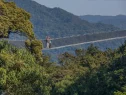
Popularly known as Birder’s Paradise, Lake Nakuru National Park is a popular safari destination in Kenya located in the Rift Valley at an elevation of 1,754 meters (5,755 feet) above sea level.
Lake Nakuru National Park covers approximately 88 square miles of rocky escarpments, pockets of acacia forest, a water fall on the Rift Valley Floor and Lake Nakuru, an alkaline lake from which the park gets its name. Until a few years ago, Lake Nakuru was most famous for the countless colorful flamingoes that painted the shores of the lake and fed on the algae in the shallows. The rising water levels caused the lake’s water to lose much of its salinity, repelling the swarms of flamingoes. Some still wander around the lake but not in huge concentrations as before 2014. Still, Lake Nakuru is gorgeous year-round and is a very rewarding birding spot.
Lake Nakuru is one of the soda lakes in the Great Rift Valley – an intracontinental rift whose East African part also runs through Kenya.
Lake Nakuru National Park was established as a conservation area for the birds of Lake Nakuru particularly flamingoes in 1975, it was done purposely to protect the lake, prevent pollution as well as protect the birdlife. In 1968, the park was designated as a national park in 1968 at that time covering an area of 188km2. As a result, several wildlife species including black eastern and white rhinos were reintroduced to the park, transforming it from a bird sanctuary to a wildlife park. Rhinos were brought to Lake Nakuru National Park in 1980s as part of a Kenyan government campaign to save the endangered creatures, whose numbers were rapidly declining. This act was the first of its sort in the country’s first government protected rhino sanctuary in 1984. In 1986, the Kenyan government created a 188km2 electric fence around the park to protect rhinos from poachers. This barrier served and continues to serve the aim of keeping poachers out of the park, as well as keeping rhinos within the park’s boundaries. Following the successful establishment of the electric fence, the Kenyan government officially designated Lake Nakuru National Park as a rhino Sanctuary in 1987.
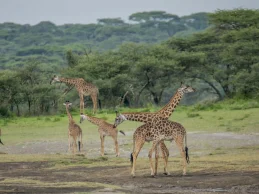
In 1977, the endangered Rothschild Giraffe was introduced to the park. These giraffes were relocated from western Kenya for protection purposes and now is home to a healthy population of Rothschild Giraffes.
Lake Nakuru National Park is a UNESCO World Heritage Site, and it has been designated as an Important Birding Area (IBA) since 2009 with over 400 bird species recorded here.
Wildlife in Lake Nakuru National Park
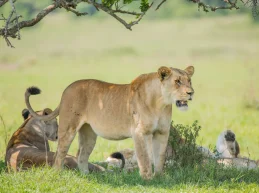
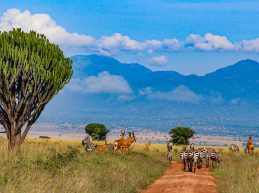
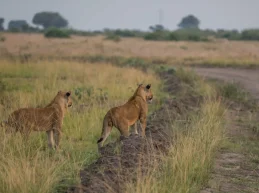
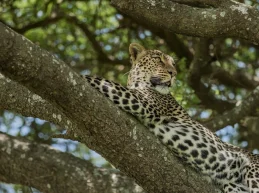
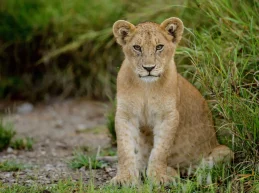
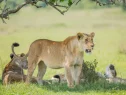
With diverse habitants including savannah, Lake Nakuru National Park is home to over 50 mammal species including African wild dog, waterbucks, black and white rhinos, Rothschild giraffes, leopards, cheetahs, lions, zebras, impalas, colobus monkeys, gazelles and pythons among others.
Lake Nakuru National Park being a Rhino Sanctuary, it is home to both black and white rhinos
Birdlife in Lake Nakuru National Park
Lake Nakuru National Park is home to more than 400 bird species with the pink flamingoes being the park’s primary attraction, the park is home for the flocks of up to 2 million greater and lesser flamingoes nesting on the shores of the lake.
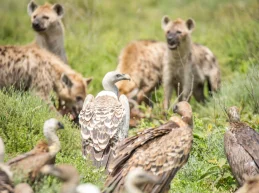
Other bird species recorded in Lake Nakuru National Park include the Abyssinian ground-thrush, Arrow-marked babbler, Black-tailed godwit, Black-winged lapwing, Brimstone canary, Brown-backed-scrub robin, Crab-plover, Eastern imperial eagle, European roller, Grey-crowned crane, Grey-headed woodpecker, Great snipe, Greater spotted eagle, Grey-crested helmet-shrike, Hildebrandt’s starling, Kenya rufous sparrow, the Lappet-faced vulture, Lesser kestrel, Long-tailed widowbird, Maccoa duck, Slender-billed greenbul Montane white-eye, Northern Puffback, Western reef heron, Pallid harrier, Shining sunbird Red-capped lark, Rufous-throated wryneck, Rüppell’s vulture, Rüppell’s robin-chat, Schawlow’s wheatear, Sooty falcon, Speke’s weaver, White-fronted bee-eater, White-headed vulture and among others.
Safari Activities in Lake Nakuru National Park
Wildlife viewing
Game viewing is the main Kenya Safari Activity in Lake Nakuru National Park, the park is home to a variety of wildlife species making it ideal for game viewing safaris. Game drives in Lake Nakuru National Park are done as morning and afternoon game drives offering you sights of various animals including buffaloes, giraffes, rhinos, leopards, antelopes, zebras and lions among others.,
Bird watching
With over 500 bird species calling Lake Nakuru National Park’s habitats home, the park is recognized as an Important Birding Area and paradise for bird watching. Some of the birds to look out for in Lake Nakuru National Park include the lesser and greater flamingoes on the shores of Lake Nakuru, Grey-crowned crane, Grey-headed woodpecker, Great snipe, Greater spotted eagle, Grey-crested helmet-shrike, Hildebrandt’s starling, Kenya rufous sparrow, the Lappet-faced vulture, Lesser kestrel, Long-tailed widowbird, Maccoa duck, Slender-billed greenbul Montane white-eye, Northern Puffback, Western reef heron, Pallid harrier, Shining sunbird Red-capped lark, Rufous-throated wryneck, Rüppell’s vulture, Rüppell’s robin-chat, Schawlow’s wheatear, Sooty falcon, Speke’s weaver, White-fronted bee-eater and White-headed vulture among others.
Explore Makalia Falls
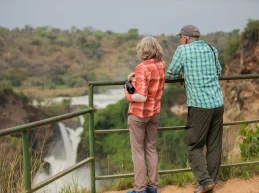
Makalia Falls is a small beautiful waterfall in southern region of Lake Nakuru National Park, the falls are easily accessible on a short drive from the park’s gates. The flow of these falls is seasonal and it might to a halt during the dry season when the volumes of water of Makalia River reduces.
The Makalia River feeds the falls with a height of about 10 meters, although it is not the most spectacular falls in the world, it is an excellent location for a short stroll or afternoon picnic while in Lake Nakuru National Park.
Visit the Baboon Cliff
Visiting the Baboon Cliff is a popular activity on a Kenya Safari in Lake Nakuru National Park, this is the most popular viewing platform in the park delivering a magnificent perspective of the entire valley. The Baboon Cliff gets its name from the baboon tribes that are known to wander the region, the cliff is also a beautiful location for picnic, with several picnic seats at the top.
The views from Baboon Cliff are at their greatest in the morning when the sky is clear and the haze from the rising sun illuminates the panoramic view. For visitors interested in stretching their legs, there are several wonderful hiking routes around the cliff. The cliff is easily accessed by a vehicle.
Visitors should take caution when eating because baboons have been known to steal food.
How To Get to Lake Nakuru National Park
- Lake Nakuru Sopa Lodge
- Lake Nakuru Lodge
- Mbweha Camp
- Sarova Lion Hill Game Lodge
- Sarova Woodlands Hotel & Spa
- Ziwa Bush Lodge
- Flamingo Hill Tented Camp
- Sleepway Cottages
Best Time to Visit Lake Nakuru National Park
Lake Nakuru National Park is good all year round, though the rains might interfere with your safari during the main wet season of March, April and May. However, June to March which receives little rain is the best season for a Lake Nakuru Safari. The best time to spot flamingoes is between November and May, when there are enough algae in the lake.