
Tarangire National Park – Home to Herds of Elephants
Named from Tarangire River that crosses through the park’s landscape, Tarangire National Park is the 6th largest park in Tanzania at a size of 2,850 sq.km. The park is famous its large herds of elephants and the iconic baobab trees, during the dry season the park experiences a mini wildlife migration which sees about 250,000 animals enter the park.
This spectacular park is situated within the Manyara Region in the Northern region of Tanzania, lies between the meadows of Masai Steppe to the south east and the lakes of the Great Rift Valley to the north and west. Tarangire National Park is part of the Northern Safari Circuit of Tanzania (the main safari route in Tanzania), it is only 120km from Arusha City – a tourist city where most safaris to the northern safari circuit start from.
Tarangire is conveniently situated along the way to the more famous Tanzania’s national parks – Serengeti National Park and Ngorongoro Crater. Due to its close proximity to these parks, Tarangire is usually a great stop-off for visitors on a Tanzania Wildlife Safari.
With Tarangire National Park’s northern park is the permanent River Tarangire – also known as the life-line of the park particularly in the dry season when most of the region is totally dry, it flows northwards until it exists the park in the northwestern corner to pour into Lake Burungi.
Tarangire National Park was first established as a game reserve in 1957 and was later upgraded to a national park in 1970.
Attractions in Tarangire National Park
Vegetation in Tarangire National Park
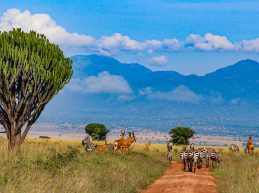
Tarangire National Park is one of the most diverse national parks in Tanzania. Its vegetation ranges from open grasslands and savannah to acacia, palm trees and baobabs as well as marsh land and swamps supporting a myriad of different wildlife species.
The iconic Baobab trees are a trademark feature of Tarangire, these trees are said to live up to 600 years storing between 300 and 900 litres of water.
Tarangire Wildlife Migration
Every year in the dry season from June to November, Tarangire National Park hosts a wildlife migration which is less dramatic as The Great Migration in the Serengeti, but receives a large number of animals. In this season the country is dry which makes Tarangire River the only source of water thus attracting large number of wildebeests, elephants, gazelles, zebras and hartebeests, buffaloes and various predators like lions that come to drink and graze around the river banks.
During the rain months of November to May, zebras as well as large herds of wildebeests move into the north-western direction towards the Rift Valley Floor among the large number of animals spreading across the large open areas of the Masaai Steppe and dispersing all the way to Lake Manyara.
Wildlife in Tarangire National Park
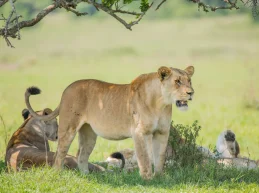
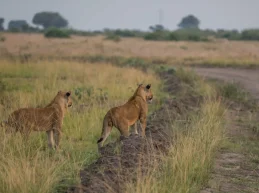
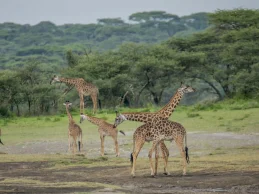
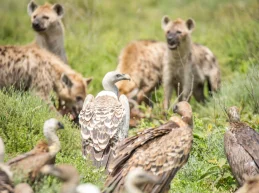
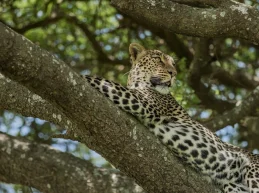
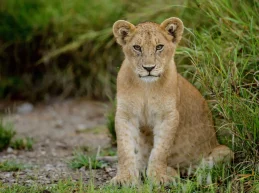
Tarangire National Park is home to one of the largest populations of elephants in Africa with several herds of up to 300 individuals per herd. Other wildlife species calling the park home include giraffes, Bohor reedbuck, coke’s hartebeests, Thompson’s gazelles, impalas, elands, buffaloes, the greater and lesser kudu, wildebeests, zebras, lions, hyenas, rhinos, cheetahs and leopards among others.
On the rare occasions, the unusual gerenuk, wild dogs and fringe-eared oryx are also seen in Tarangire National Park.
Birdlife in Tarangire National Park
Tarangire National Park is listed among the incredible birding places in Tanzania with over 545 species recorded, the park holds lots of endemic and near-endemic species and three endangered bird species of Tanzania, Rufous-tailed weaver, Ashy starling and Yellow-collared Lovebird.
Birds in Tarangire National Park include Hoopoes, Hornbills, White-bellied Go-away-bird, Brown parrots, Lilac-breasted rollers, barbets and mousebirds, striped swallows and starlings, swifts, hammerkops, bee-eaters, cordon bleus, owls, Double-banded Courser, White-headed Buffalo-Weaver, Greater Painted Snipe, Mottled Spinetail, Southern Ground Hornbill, Meyer’s Parrot, Bearded Woodpecker, Miombo Wren-warbler and Green Wood-Hoopoe among others.
Tanzania Safari Activities to Do in Tarangire National Park
Game Drives
Game drives is the most popular Tanzania safari activity in Tarangire National Park and the dry season is the best time, there are 5 routes leading to the most parts of the park thus providing the best game viewing experience .
The routes include the Lemiyon Route featuring the park headquarters and campsites in the northern part of the park, this route offers a chance to explore the park and enjoy sightings of various herds of mammals most especially during the dry season. Other routes in Tarangire National Park used on game drives include The Gursi and Lamarku routes found in the southern part, the western Lake Barungi route and Kitibong Hill Route.
Game drives in Tarangire National Park are offered as day game drives and night game drives, from the comfort of your safari vehicle lookout for several animals including large herds of elephants, zebras, buffaloes, gazelles, wild dogs, giraffes among others. The night game drive offers visitors an opportunity to see the nightlife of the park and reveal the elusive magical of the nocturnal Africa, lookout for lions, leopards, cheetahs and wild dogs returning from their hunting.
Guided Walking Tours
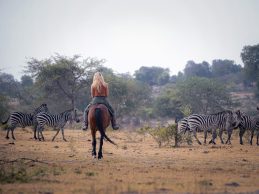
The best way to explore the incredible landscape of Tarangire National Park is on a guided walk of about 1 to 3 hours. The walk takes to areas of the park which cannot be accessed by a vehicle, there are several trails running through the park. Expect a close encounter with several animals including zebras, giraffes and a chance to see a variety of birds.
Bird Watching
Tarangire National Park is listed among the best bird watching destinations in East Africa, the park is home to more than 550 species of birds that can be spotted. Some of the common bird species in Tarangire include crested francolins, hoopoes, yellow necked spurfow, hornbills, guinea fowl, steppe eagles, brown parrots, the gigantic lappet-faced vulture, white-bellied go away bird, bateleur eagles, mousebirds, Kori bustards, yellow-collared lovebirds, bee-eaters, lilac breasted rollers, swifts, hammerkops, striped swallows and starlings among others.
The best time for bird watching in Tarangire is from November to April when the migratory species arrive from Europe and northern regions of Africa. Also the resident species begin nestling almost in the same time, therefore it is easy to see the birds while in breeding plumage.
Cultural Tours
Cultural tours in Tarangire National Park takes you to Maasai or Barabaig Village famous for its numerous ancient paintings. On a visit to the Maasai Viallge, visitors have an opportunity to learn about the Maasai people’s unique way of dressing, housing (the circular huts known as bomas). Visitors a local herbalist and also be entertained by local dance and drama.
Visitors can also purchase beautifully crafted mats, beads, baskets and others for a good memory of your Tanzania Safari when you return home.
Best time to Visit Tarangire National Park
Though Tarangire National Park is a year-round destination meaning it can be visited at any time of the year, the best time to visit however, is arguably the dry season between June to October and early November. The wildlife density is high in the dry season since many animals from surrounding areas migrate to the area’s main water source, the Tarangire River.
The vegetation is scarce meaning wildlife can easily be spotted. During the wet season the accommodation rates are lower as opposed to during the dry season.
How to Get to Visit Tarangire National Park
Tarangire National Park is easily accessed on a drive of 2 hours from Arusha covering only 7 kms. The park can also be accessed from Ngorongoro Conservation Area and Tarangire National Park.
Because of the park’s close proximity to Arusha City, there is no need to use charter flights. The available charter flights are from Arusha Airport to Serengeti and then connect to Tarangire.
Where to stay in Tarangire National Park
There are several accommodation options in Tarangire National Park ranging from budget, midrange to luxury options. These include
- Nimali Tarangire Tented camp
- Acacia Tarangire Luxury Camp
- Sanctuary Swala Camp
- Lemala Mpingo Ridge Lodge
- Ecoscience Science Center and Luxury Lodge
- Tarangire Safari Lodge
- Tarangire Sopa Lodge
- Ang’ata Tarangire Camp
- Kikoti Tented Camp among others.