At a size of 8,300 square kilometers, Ngorongoro Conservation Area is one of the most popular safari destinations in Tanzania and the only place on earth where man and wild animals co-exist harmoniously.
The Ngorongoro spans from Serengeti National Park in the north, to the Great Rift Valley in the west and it consists of the Ngorongoro Crater, Ndutu, Olduvai Gorge, Empakaai, Olmoti Crater and Oldonyo Lengai Mountain.
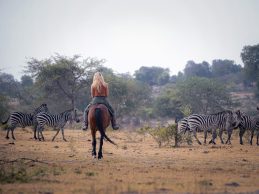
Ngorongoro Conservation Area (NCA) is a UNESCO World Heritage Site declared in 1979, originally Ngorongoro was part Serengeti National Park in 1951 when established by the British. In 1959, the Ngorongoro Conservation Area Authority (NCAA) was formed separating it from the Serengeti. The land inside the area is multi-use, providing protection status for wildlife while also permitting human to live there. What makes Ngorongoro Crater Area unique is that humans, livestock and wild animals harmoniously co-exist, zebras and other antelopes are sometimes seen grazing alongside Maasai cattle.
Ngorongoro Crater
The World famous Ngorongoro Crater is the main feature of the area. Over two million years ago, the large volcano exploded and collapsed on itself thus forming Ngorongoro Crater. Ngorongoro Crater is 20 kilometers wide and 600 meters deep, because of its natural beautiful it was chosen as one of Africa’s Seven Natural Wonders.
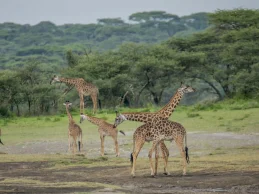
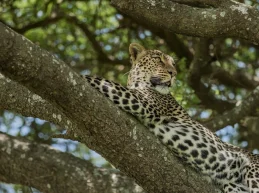
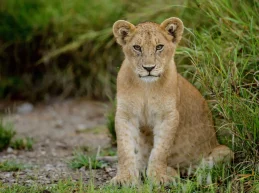
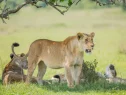
The crater is home to the highest concentration of wildlife in Africa including the Big Five – lion, leopards, elephants, buffaloes and rhinos.
Wildlife in Ngorongoro Conservation Area
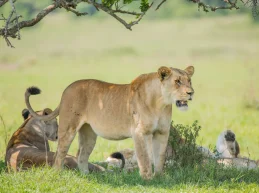
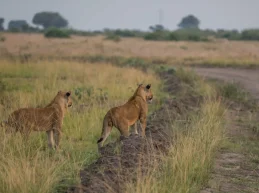
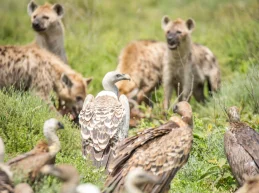
Ngorongoro Conservation Area hosts over 25,000 large animals including approximately 26 black rhinoceros, large herds of elephants, leopards, mountain reedbuck, buffaloes, rare wild dogs, spotted hyenas, jackals, cheetahs and other felines. Ngorongoro Crater hosts the densest-known lion population.
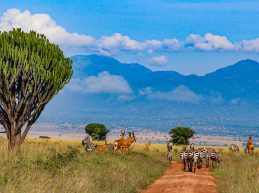
In December, approximately 2 million ungulates move south into the area then move back out in June and head north. The migrant herds passing through the plains of the Ngorongoro Conservation Area include 1.8 million wildebeests, 200,000 zebras, and 350,000 gazelles. To the west of the crater is Lake Ndutu, host to a large population of cheetah and lion.
Birdlife in Ngorongoro Conservation Area
Over 500 species of bird have also been recorded within the Ngorongoro Crater,
Vegetation in in Ngorongoro Conservation Area
Ngorongoro Conservation Area is home to desert plants as well as lush green, rain-watered vegetation. The area is dominated by abundant short grass, arid and semi-arid plant species, uncultivated lowland vegetation and highland forests.
In the west, on Oldeani Mountain and Pencil Cedar there are extensive stretches of pure bamboo. The Dove-weeds are prominent on the lower slopes and the upland woodland are home to the Red Thorn Acacia and Gum Acacia – critical for protecting the watershed. The slopes of Ngorongoro Crater are covered by Scrub heath, high open moorland, grasslands and dense vegetation forests. The highland trees including Yellow-wood, Kousso, (Hagenia abyssinica), Peacock Flower and Sweet Olive are also found here.
The basin of Ngorongoro Crater is covered by open grass plains with fresh water lakes, swamps, marshes, and two patches of Acacia woodland. Laiyanai Forest is dominated by Pillar wood and Acacia Lahai while the Lerai Forest comprises of Yellow Fever Tree and Acacia.
The Olduvai Gorge
The Ngorongoro Crater is where human life began, at the far end stands the archaeological site – the Olduvai Gorge, widely regarded as the cradle of mankind and the most important prehistoric site in the world.
The earliest remains of homo sapiens were discovered here by Dr. Louis and Mary Leakey over 50 years ago and during your visit you will be fascinated by this extraordinary place. Wonder at the rugged landscape and explore the quaint little museum. This paleo-anthropological site is a steep-sided ravine in the Great Rift Valley composed of two branches that have a combined length of about 48 km and are 90 meters deep.
Olduvai Gorge is named after the Maasai word for the wild sisal plant – Oldupaai.
Safari Activities to Do in in Ngorongoro Conservation Area
Wildlife Game drives
Birdlife can be seen among the various tree species during game drives as you descend into the Ngorongoro Crater. A wide range of animals can also be seen on the crater floor.
Depending on the season, flocks of pink flamingos can be seen around the shores of Lake Magadi. Hippos can be seen in the surrounding swamp. Most of the resident game lives in the open grasslands north of the Crater.
2. Walking safaris
Walking safaris provide an up-close encounter with the natural environment. This activity is done on foot with a ranger guide.
Various wildlife species can also be seen while exploring the Ngorongoro conservation area. These walks can also be done around the Ngorongoro crater rim where wildlife such as elephants can be seen in the surrounding forest.
3. Bird watching
The Ngorongoro Conservation Area is home to over 550 bird species. These are visible on game drives and walking safaris.
The highland forest is home to the white-eyed slaty flycatcher and the Livingstone turaco. Flamingos can be seen around Lake Magadi depending on the season. Ostriches, starlings, black kites, grey-crowned cranes, African spoonbills, and other birds can also be seen in the area.
4. Oldupai visit
You can take a guided walk through the gorge or look for early human footprints in Laetoli. These footprints were discovered on a volcanic rock and date back more than 3 million years.
There is a small museum open to the public that houses discovered remains and artifacts for tourists to see. Realistic copies of the most significant discoveries can be viewed with ease, and guided tours of the sites can be taken with knowledgeable guides.
5. Cultural visits
Cultural visits include interactions with Maasai people, visits to traditional Maasai homesteads, and watching traditional dance performances, among other activities.
Tourists may also choose to visit the Hadzabe tribe. The Hadzabe are primitive people who still hunt and gather. You can learn about their culture by taking a tour of their remote habitats.
How To Get to in Ngorongoro Conservation Area
There are two options to get to Ngorongoro Conservation Area that is by road or by flying.
By Road – From Arusha Town, it is a drive of about 4 hours to Ngorongoro Crater.
By Air – there are domestic and charter flights from Wilson Airport to Lake Manyara Airstrip, then connect to area by a vehicle.
Where to Stay in in Ngorongoro Conservation Area
There are several accommodation options in Ngorongoro Conservation Area ranging from budget, midrange and luxury. Our best safari lodges and Ngorongoro include
- Gibbs Farm
- The Highlands
- The Manor House
- Ngorongoro Crater Lodge
- Ngorongoro Serena Safari Lodge
- Bougainvillea Safari Lodge
- Ngorongoro Farm House
- Plantation Lodge
- Lemala Ngorongoro Tented Camp
Best time to Visit in Ngorongoro Conservation Area
The best time to visit Ngorongoro Conservation Area is during the dry season June to October, during this season the vegetation cover is short making it easy to see the animals during the game drives, also animals congregate at remaining watering holes.
The rainy season from April to May is also one of the best times to visit Ngorongoro Crater, there are fewer visitors this time of the year and the crater is wonderfully lush and green compared to the dusty dry-season landscape. Expect high visitor numbers during the July to September peak season.
With Ngorongoro’s wildlife remaining in the steep-walled crater all year round.